Digital Twin Platforms for Construction Project Controls
Real-time data alone cannot fix control processes built on incomplete documentation.
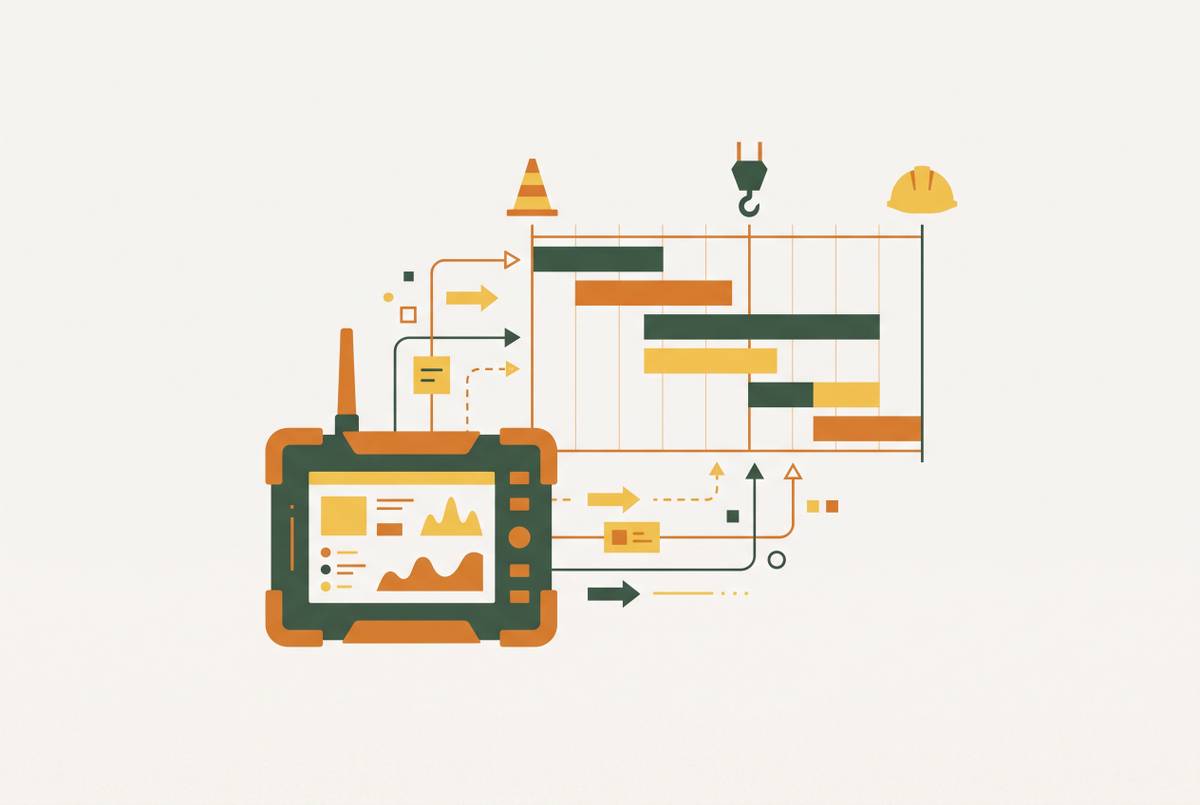
Digital twin platforms for construction project controls promise to link project plans to what is happening on site. Their value depends on whether that connection carries reliable data into decisions that can still change the outcome. A twin can improve a sound control process, but it cannot repair a broken one simply by mirroring it more closely.
Why construction project controls keep failing despite better planning tools
Work on site moves ahead while the control record catches up. Progress tracking and cost updates often depend on manual submissions, so deviations can compound before they appear in a report. When reports come weekly or monthly, teams make decisions with only part of the picture or with data that is already old.
The UT Arlington 4D/5D digital-twin study identifies deterministic CPM scheduling and static document-based estimating as foundational limits on adaptive control. These tools capture intent but cannot fully reflect the uncertainty and interdependence of modern projects. The dominant causes of overruns shift, including change orders, labor shortages, material delays, and design information gaps, yet cost and schedule slippage persist. Better planning tools do not close that structural gap when their updates still depend on a delayed reporting process. As inconsistencies accumulate, the same gap that weakens decisions also makes audit evidence harder to assemble.
What a construction digital twin actually does in a project controls context
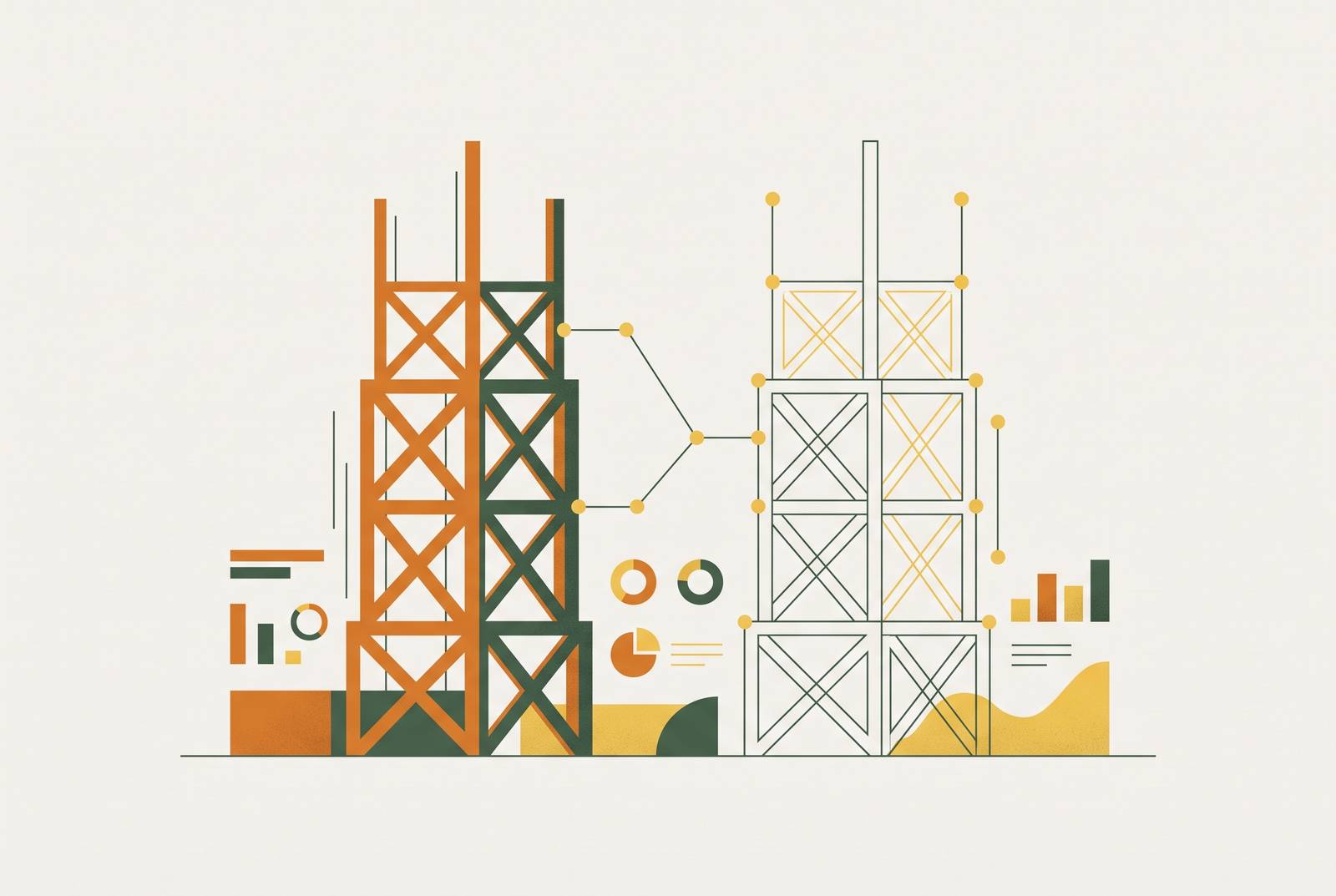
A construction digital twin is a live virtual representation that maintains bidirectional data exchange with the physical asset and supports simulation and decision-making. It is not simply a BIM model connected to a dashboard. BIM supplies the geometric and semantic foundation, while the twin adds live data, automated exchange, and continuity across the asset lifecycle. In project controls, that architecture connects the representation of planned work with evidence of actual progress.
Level 1, the Digital Model, relies on manual data flows, with no automatic propagation between the physical and digital sides. Traditional BIM used during design is at this level. Level 2, the Digital Shadow, receives automatic updates from the physical side through sources such as IoT sensors or drone capture, but the flow runs only one way. Level 3, the Digital Twin, exchanges data automatically in both directions, using the twin's recommendations to change operations and feeding data on actual performance back into the model.
Most current construction implementations operate at Level 1 or are moving toward Level 2. True Level 3 twins remain aspirational in most real-world construction settings, which limits what a platform's label can establish. BIM alone does not capture field substitutions made under schedule pressure or preserve commissioning data and performance baselines after handover. A twin is intended to close those gaps, but only if its data exchange continues through the transitions where information is otherwise lost.
The data stack a digital twin depends on, and where it typically breaks
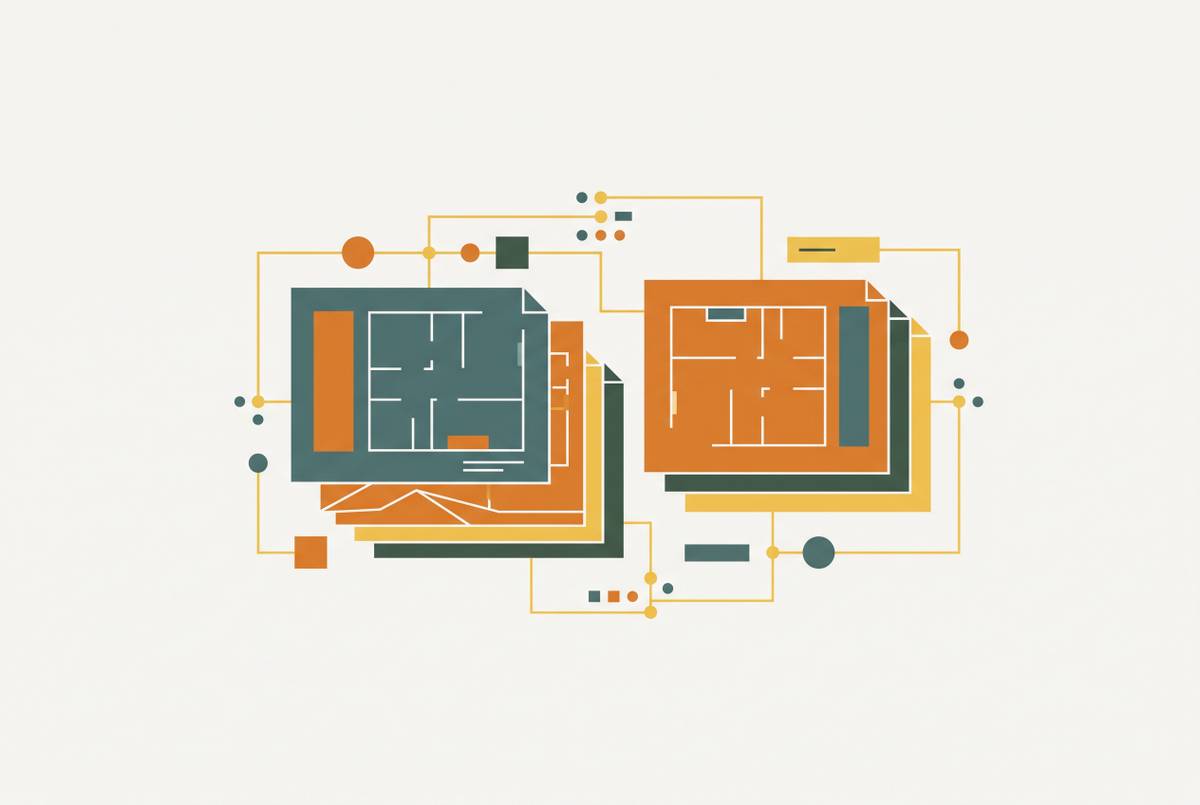
A working twin must connect geometry from a BIM authoring tool, as-built conditions from reality capture, and live conditions from sensors or a project management system. Most teams combine vendors across those layers, making integration depth a practical constraint. A connection between systems is not enough if the same information carries different definitions in each one. The twin needs consistent meaning as well as access to data.
Data is duplicated across systems, context disappears as work moves between teams, and staff export spreadsheets before re-entering the same information elsewhere. Paper timecards, submissions that arrive late, and job coding that varies leave gaps when the data is first recorded. Analytics then look back at what has happened because the record arrives too late or lacks the context needed to make sense of it. Adding a live interface does not make those records timely or complete.
Change orders make the weakness particularly clear because each one needs a traceable lineage. That lineage must show the original scope, what changed, who approved it, and when. Undocumented scope changes break the audit chain and are among the leading triggers for construction disputes and cost overruns. If the twin receives only the revised position, the missing history remains a structural limit because the platform exposes and amplifies the quality of the information supplied to it.
Where the 4D/5D framework holds: what an integrated twin actually controls
When data quality and integration depth are sufficient, a 4D/5D twin can move controls from periodic reporting toward continuous, probabilistic forecasting. The UT Arlington 4D/5D digital-twin study validated its framework on a nine-month mid-rise project in Dallas–Fort Worth. It reported a significant reduction in estimating labor, reduced overtime, and an on-time completion within P50–P80 confidence bounds. Its digital-twin sandbox supported real-time “what-if” forecasting, while a 5D knowledge graph provided traceable cost-schedule alignment. This specific case provides evidence for integrated control that is limited to the implementation tested.
The framework's mechanisms explain the difference. Natural-language processing, or NLP, maps specifications to standardized cost codes, so people have less to interpret by hand. Computer vision, or CV, and LiDAR measure how much work is done for earned value updates, taking the place of manual site walks. Bayesian probabilistic CPM updates the schedule as field data arrives, while deep reinforcement learning, or DRL, optimizes resource allocations under changing constraints.
Procurement provides a concrete application because material availability is a schedule dependency as well as a cost concern. AI tools can use the schedule to forecast which materials will be needed, flag price volatility, and suggest when to place orders. They can also identify mismatches between purchase orders, deliveries, and invoices before those differences become leakage. The controls value comes from connecting these signals.
Energization and commissioning test that integration at the end of construction. Civil work, structural installation, and equipment energization must align precisely, because a delay in one package can stall commissioning across the facility. A twin that tracks how those tasks depend on each other can warn controls teams sooner than a document-based system. Its advantage is the ability to expose a consequential relationship while there is still time to act on it.
Where digital twins predictably fail: the process-mirroring problem
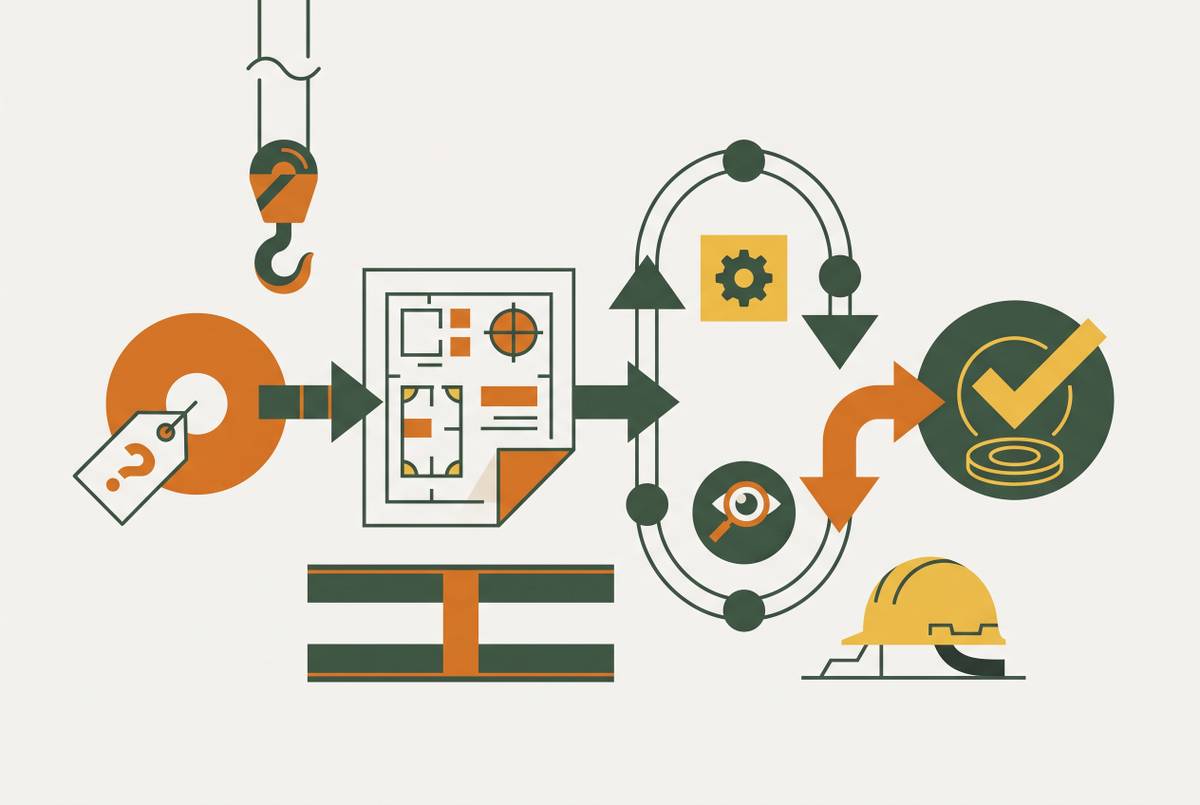
Because a twin closely mirrors the process, it can also carry that process's flaws into the model. If progress updates come late, the model shows old conditions. If field changes go undocumented, the model reflects the declared plan and leaves the work installed unrepresented. More frequent analysis can then turn incomplete inputs into confident-looking outputs without correcting the underlying record. Faster reporting is not faster control when the evidence is wrong.
This is why an operational audit needs people to observe work on site, review documents, and interview frontline workers. Each reveals a different part of the process, and reliance on only one leaves blind spots. Spotless digital paperwork can coexist with shortcuts taken under schedule pressure. Field substitutions may go unrecorded, approvals may be bypassed, and commissioning information may be lost because nobody structures it for transfer. Buildings can consequently enter operation with knowledge gaps that persist for decades.
Reporting lag creates a separate limit even when the submitted information is accurate. If deviations appear in reports within weeks rather than days, earlier options for labor allocation, resequencing, or supplier coordination may already have closed. Most current implementations remain descriptive rather than predictive because manual progress and cost updates preserve that lag. The maturity taxonomy therefore matters operationally, since an automatically refreshed shadow is not necessarily a decision-driving twin.
Scaling requires investment, governance, and changes in working practices that a technical demonstration does not prove. Agentic AI remains narrow in construction management, with uses including drafting RFIs, first-pass submittal review, daily logs, and schedule risk detection. A handful of firms pilot agents that resequence dependent tasks and notify affected trades when deliveries slip, but these systems are not yet running core delivery workflows.
How regulatory mandates are raising the stakes for data governance, not just data collection
Regulatory mandates in 2026 raise the standard from possessing a digital representation to maintaining data that can be trusted and transferred. That change makes governance part of how the work is run, beyond a separate check that rules have been met. A record that cannot survive handover does not provide lifecycle continuity. A record whose meaning or authority is unclear cannot support dependable control simply because it is available digitally.
AI adds to the risk of breaching contracts when project documents are put into third-party tools. An upload may implicate or breach confidentiality obligations, while agreements with software vendors, consultants, subcontractors, and clients may not address whether AI use is permitted. Those agreements may also leave unresolved how project data can be used, who owns inputs and outputs, and who bears the risk of an incorrect AI-assisted deliverable. The resulting exposure concerns both the handling of project information and the decisions made from it.
These obligations return the argument to the process being mirrored. Whether information can be trusted and transferred depends on how it is recorded and approved, who owns it, and how it passes between parties. A twin cannot supply that governance after the fact merely by retaining more data. When its information cannot be trusted or transferred, the control failure carries the added liability of a system that appeared to work.
What separates implementations that hold from those that stall
Implementations reach production when the underlying workflow is fit to model and the organization is prepared to govern its data. Platform sophistication does not settle either condition. The useful diagnostic is where documentation breaks down, where approvals are bypassed, where field information arrives too late, and where audit evidence becomes difficult to reconstruct. Those weaknesses identify the control work that needs redesign before automation can improve it.
For example, a contractor whose timecards come in late has a different problem from one that loses the approval history of change orders. The first makes it hard to see labor use in time to act, while the second leaves gaps in the record of which scope was authorized. Treating both as a generic need for a digital twin obscures the work required. Those problems should guide how workflows are designed, who does what, and which systems need to be linked first. The platform then serves the revised process.
People need change management to put that revised process into practice. A system that changes how people document, approve, and report work encounters resistance in proportion to the difference from established practice. Deployment alone does not demonstrate that the field will supply the information the model needs. If behavior remains unchanged, the twin continues to mirror the old process, regardless of how the digital workflow was designed. That is why process redesign, rather than tool installation, separates measurable controls value from an extended pilot.
How to evaluate a digital twin program before it scales
Evaluation should start with a process audit before a platform is chosen. The audit must show how a specific process runs in the field rather than how the documented procedure says it runs. It should locate late submissions, bypassed approvals, manual re-entry, and undocumented substitutions. From that evidence, the organization can identify the single most painful process where better data would change a decision currently made without adequate visibility.
Vendor evaluation should then require a clear account of the maturity level the proposed system reaches. Manual data flow indicates Level 1, automated one-way flow indicates Level 2, and bidirectional, decision-driving exchange indicates Level 3. The account must show how the system works in practice beyond what its marketing claims. Governance readiness is equally necessary, including who owns the data, how it transfers at handover, and what happens when an AI-assisted output is wrong.
The first AI-first process should be live and producing measurable signal within weeks. A timeline measured in quarters indicates that the scope is wrong or that the approach has become platform-first. Energization readiness, commissioning sequencing, and procurement dependency tracking deserve particular scrutiny because their broken links can become schedule events. The audit should find which information could reveal those links while there is still time to make a decision that changes the outcome.
The objection that twin technology is too immature to justify process redesign reverses the risk. Deploying a sophisticated model over an unexamined process can produce a confident, well-instrumented failure with risks beyond those of a cheap experiment. The starting test is therefore operational. The process must produce trustworthy evidence soon enough for someone to use it, or the twin will only make the distance between the plan and the site easier to see.