AI Dispatch and Routing Tools for Mid-Size Freight Operations
These tools work best when they target a specific process failure, not every dispatch problem.
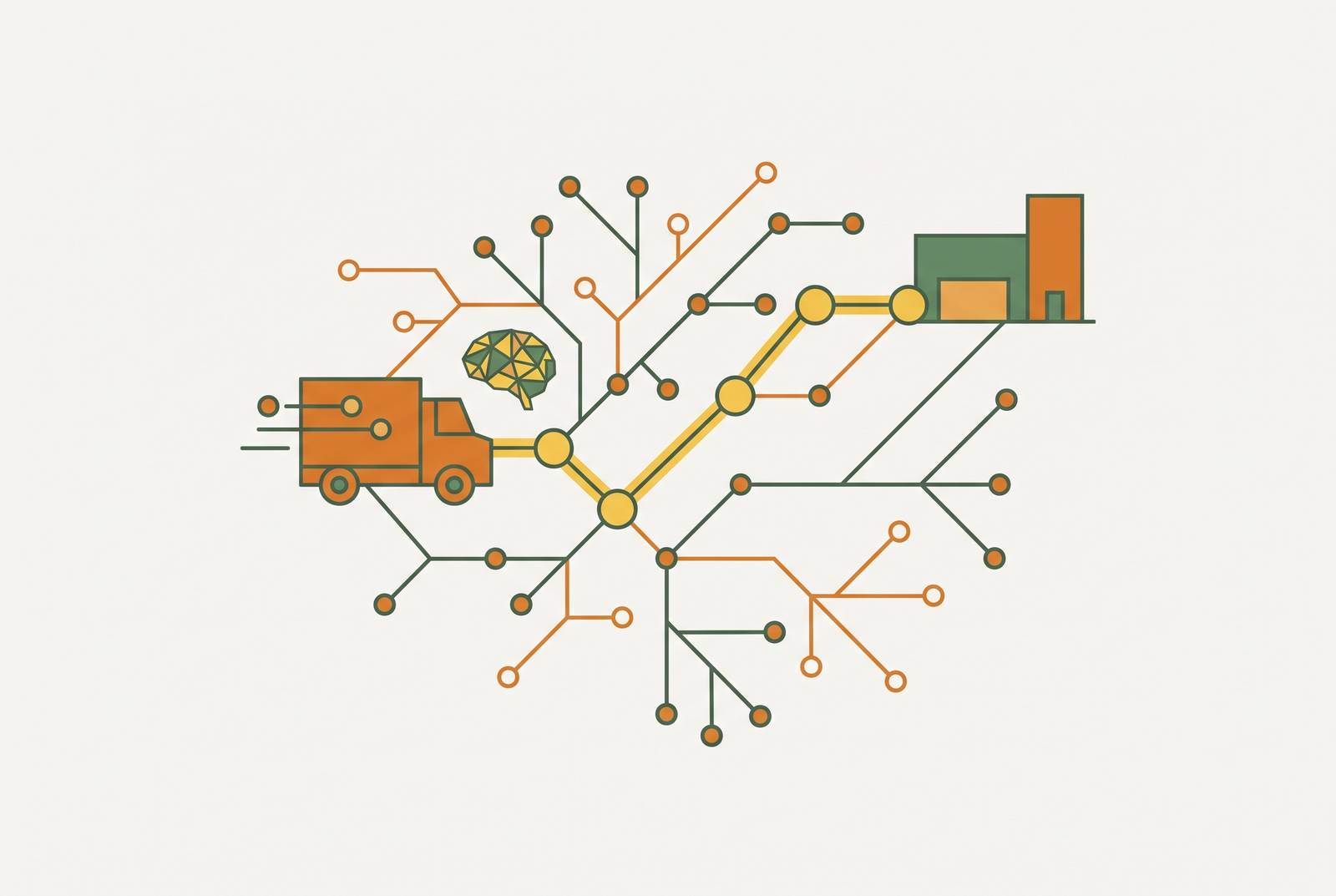
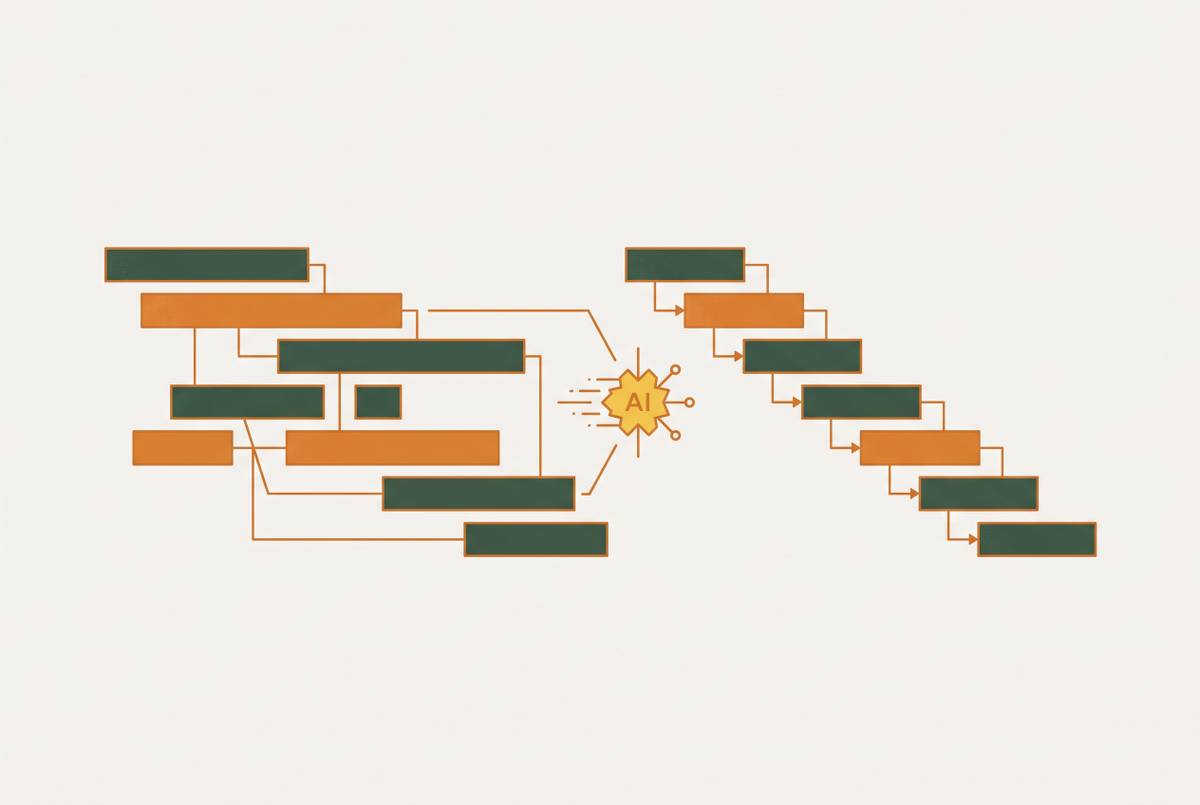
AI dispatch and routing tools deliver value for mid-size freight operations when they address a specific process failure. The deciding factor is whether the tool changes a dispatch decision while that decision still matters. Empty miles, stale routing data, and carrier vetting require different responses, but each depends on live inputs, explicit rules, and a place inside the operating workflow.
Why mid-size freight operations face a different dispatch problem than large carriers
Mid-size operators sit between owner-operators and enterprise freight businesses in the volume they handle and the resources they have. They handle enough volume for manual dispatching to become expensive, but lack the proprietary data and IT staff needed to absorb an enterprise deployment. Phone-and-spreadsheet workflows carry materially higher transportation costs while leaving dispatchers to manage chronic driver shortages. Customer expectations for shipment visibility add pressure that those workflows cannot reliably meet.
Large freight brokers and 3PLs have a different foundation. C.H. Robinson runs AI across shipment workflows including pricing, planning, capacity, routing, tracking, documents, and invoicing, drawing on decades of proprietary shipment data. Mid-size operators cannot replicate that architecture and should not try. Their task is narrower, which is to improve costly decisions without taking on infrastructure their operation cannot support.
The entry barrier has nevertheless fallen. With pre-built agent templates and cloud-based platforms, businesses that handle a substantial number of shipments each day can use AI logistics tools without enterprise IT infrastructure. That access changes what a mid-size operator can deploy, but not what it needs to establish first. The useful starting point remains the process that is failing.
The three process pain points where dispatch actually breaks down for mid-size fleets
Empty miles often begin with the information available when a load is assigned. The dispatcher may be working from a trailer location that was already stale. When location, driver hours, and load requirements require separate manual checks, the assignment rests on inputs that may no longer agree. The failure is therefore one of data latency at a decision point.
Stale routing data also causes problems after dispatch. A static plan begins to age as soon as it is finalized. A delayed pickup, a closed route, or a driver approaching an Hours of Service limit can cascade through the remaining schedule if the system cannot re-optimize during execution. Historical delay patterns at particular stops and times of day matter too, because reacting to a disruption differs from anticipating it before departure. Weather, traffic, port congestion, and carrier performance add risks, and mid-size teams may have no analysts whose job is to watch for them.
Carrier vetting and administrative drag have a different cause. Check calls, documentation collection, and vetting delays take up staff time, while the rules for handling exceptions often stay in the heads of experienced employees. An agent cannot reliably apply a vetting requirement or escalation trigger that has never been made explicit. Treating all three failures as one feature gap obscures the separate work needed to correct them.
What AI dispatch tools actually do well, and on what freight types they fall short
AI dispatch tools fall short when loads are complex, depend on relationships, or have many constraints, because an experienced dispatcher still needs to make the call. A platform does not know that a particular broker always lowballs the first offer. Nor does it necessarily know that a shipper’s stated two-hour appointment window means a six-hour wait in practice. That context belongs to the dispatcher unless it has been made available to the system.
Optimization can also introduce fragility. A system may pack routes so tightly that one delay destabilizes the whole schedule, particularly with high stop density or narrow delivery windows. An attractive plan is therefore not the same as a resilient one. Dispatcher-to-vehicle ratio gains are real for commoditized workflows, but they do not transfer unchanged to complex freight.
The biggest gains come when there is a high volume of commoditized freight and the lanes are predictable. Live telematics can show trailer location, driver hours, and load requirements in one place, so dispatchers can check them together. During execution, real-time rerouting can revise the remaining legs before a disruption spreads. Load sequencing and consolidation can account for time windows, loading order, and traffic by time of day, reducing idle time and backtracking. Predictive analytics can flag likely delays before dispatch, as well as help teams respond to them afterward.
Optimal Dynamics launched Scale on March 2, 2026, to add a layer for agentic freight procurement. Descartes launched MacroPoint OpsForce in early 2026 to automate freight visibility exception workflows. Those descriptions do not say that either product can take over every dispatch task. Like GPS in a truck, AI supplies guidance that a good dispatcher can override when local knowledge or experience says otherwise.
The tool landscape for mid-size operators and what each category actually solves
Dynamic dispatch and real-time route optimization address empty miles and plans that become stale during execution. Wise Systems serves distribution fleets that make recurring trips and fits lanes that are predictable and have high stop density. DispatchTrack is suited to scheduled last-mile delivery, where appointment windows and delivery sequence matter most. With Locus, dispatch is part of a closed-loop system that also has route optimization, real-time visibility, multi-carrier allocation, and exception management. That scope is most relevant to operators managing multi-carrier or multi-hub complexity.
The AI Dispatch Intelligence Maturity Model provides a useful distinction within this category. Level 2 tools apply rules to static plans and are the most common mid-market offering. Level 3 tools dynamically re-optimize during execution, making that level the meaningful threshold where disruptions are frequent. Buying assignment automation for a problem that needs full orchestration is the mismatch described as selecting a Level 2 tool to solve a Level 4 problem. Feature count does not resolve that mismatch.
Freight procurement and load matching target deadhead reduction and backhaul opportunities. Optimal Dynamics Scale searches, negotiates, and bids across load boards, direct shipper channels, email, and EDI. At launch, it was in exclusive rollout with existing customers, with wider availability expected early the following quarter. DAT acquired Convoy Platform’s automated freight-matching technology and plans to integrate it into DAT One, while offering it as a standalone product free to BrokerPro TMS customers. Uber Freight’s Insights AI added voice-based rate negotiation agents that cut the time drivers spend on hold during booking calls while keeping human verification in place.
Visibility and administrative tools address work that routing engines do not. Descartes MacroPoint OpsForce automates driver engagement, tracking continuity, arrival and departure confirmation, and documentation collection. FourKites launched Loft in February 2026 to connect internal systems including ERP, CRM, and ITSM with external intelligence from its trading partner network. Its agents have distinct roles, namely Tracy for logistics, Sam for supplier collaboration, Alan for scheduling, and Sophie for workflow development. Freightos completed the WebCargo rebrand to Freightos for Forwarders and expanded Rate & Quote from air into ocean freight, making unified multimodal rate management relevant to cross-border and multimodal operations.
Selecting across these categories can be appropriate when the failures are distinct. Across all of them, fit depends on live access to existing telematics and TMS data, behavior as fleet size and stop density grow, and usable human controls. New hardware or a separate data feed adds implementation time and risk. Dispatcher overrides, configurable approvals, and confidence-based recommendations matter because a bad decision has immediate cost and SLA consequences.
Why most AI dispatch deployments fail before the tool question even matters
The dominant deployment failure is applying AI to a broken process before validating a single workflow. Automation then repeats the same failure faster and more often. Escalation, exception handling, and carrier vetting are especially vulnerable when their governing rules have never been documented. The technology cannot compensate for an operation that has not defined when it should act and when it should stop.
Data quality is an equally important precondition. Duplicate and mislabeled facilities are among the leading sources of agent errors. Margin bands, vetting requirements, and escalation triggers may also exist only in people’s heads, leaving the agent without readable instructions. Using the software for more decisions before fixing these problems lets them spread.
Auditability requires deliberate design as well. AI agents can be more auditable than manual dispatch when each decision records its inputs, applied rules, and outputs. That advantage holds only when logging is built into the architecture from the start. A gap between what teams believe is automated and what actually executes autonomously remains an operational risk. Warehouse, dispatch, brokerage, and customer-service teams become failure points if they do not understand or trust the changed workflow.
Existing AI features in a TMS do not settle these issues. A rule-based static planner still depends on explicit processes and may not handle exceptions during execution. Before selecting a tool, the operation needs documented rules clear enough for an agent to follow without an unspoken dispatcher judgment. Where that condition is absent, rebuilding the process comes before deployment.
How to audit dispatch and routing workflows before committing to a tool
The audit begins by locating a measurable failure. For empty miles, reconstruct the assignment decision using the time the load was assigned and the information available then. Establish why the trailer’s actual location was unknown or wrong. This separates a latency problem from a routing-logic problem and prevents buying the latter’s solution for the former.
For stale routes, look at what happened when conditions changed after dispatch. Even a good starting plan can fail if someone has to step in by hand to handle a mid-day disruption. For administrative drag, surface the rules behind check calls, documentation handling, and carrier vetting delays. The purpose is to make those rules explicit before asking an agent to follow them. Each diagnosis should identify the point at which better information or a defined rule would change the action.
Validate the data foundation before comparing products. Confirm that a candidate can pull live data from the telematics and TMS systems already in place, and resolve duplicates and mislabeling in facility and carrier master data. Document exception, escalation, and vetting requirements in terms the agent can apply. Choose the first workflow by pain intensity and rule clarity. Build overrides, approval workflows, and confidence-based recommendations into that first deployment so the team has a practical reason to trust it.
Vendor conversations should test those requirements. A claim about the dispatcher-to-vehicle ratio needs to be checked against the freight mix, while a routing demonstration needs to show whether re-optimization happens while drivers are on the road or only at dispatch. Neither a staffing metric nor a polished initial plan establishes workflow fit. Rates rising meaningfully year-over-year and higher contract forecasts increase the stakes for smaller procurement teams. Before the primary routing guide fails, routing logic needs to account for how many backup carriers are available, fuel triggers, and how accessorials are handled.
What a well-matched AI dispatch deployment looks like in practice
Voyager Express grew from a small fleet into a large operation with a high on-time pick-up and delivery rate through PCS TMS-driven dispatching matched to truckload and intermodal assignment. Small gains added up through decisions about drivers, routes, cargo types, and departure times. Where a particular combination produced a predictable delay, the system could adjust departure proactively before the delay spread.
Inside the workflow, an agent sees live telematics, driver hours, delivery windows, and carrier status at the point where a dispatcher would act. Its recommendation or autonomous action arrives while the outcome can still change. A reporting layer instead summarizes what happened and leaves the dispatcher to translate the insight into action. That is useful for review, but it does not perform the same operational job.
The operating model is still developing. CSCMP, Kearney, and Penske Logistics’ Forged in Disruption: 2026 State of Logistics Report, published in June 2026, describes commercial autonomous freight on specific corridors, including driver-covered local delivery paired with automated long-haul middle miles. Most mid-size fleets will not adopt that model immediately. Yet the live data, clear rules, decisions that can be audited, and human controls that model needs also help dispatch automation work well now.
The practical standard has four parts. Empty miles should fall because loads are assigned based on live trailer locations. The system should handle mid-day disruptions before dispatchers have to re-plot the schedule by hand. Exception handling should be rule-driven and logged. Administrative work should get done within the workflow instead of waiting in a queue for staff to review it afterward. Those outcomes distinguish a tool that improves dispatch from one that merely reports on it.