Construction Workflow Mapping as a Stack Decision Input Not a Discovery Exercise
Mapping how work actually moves should precede buying any AI tool.
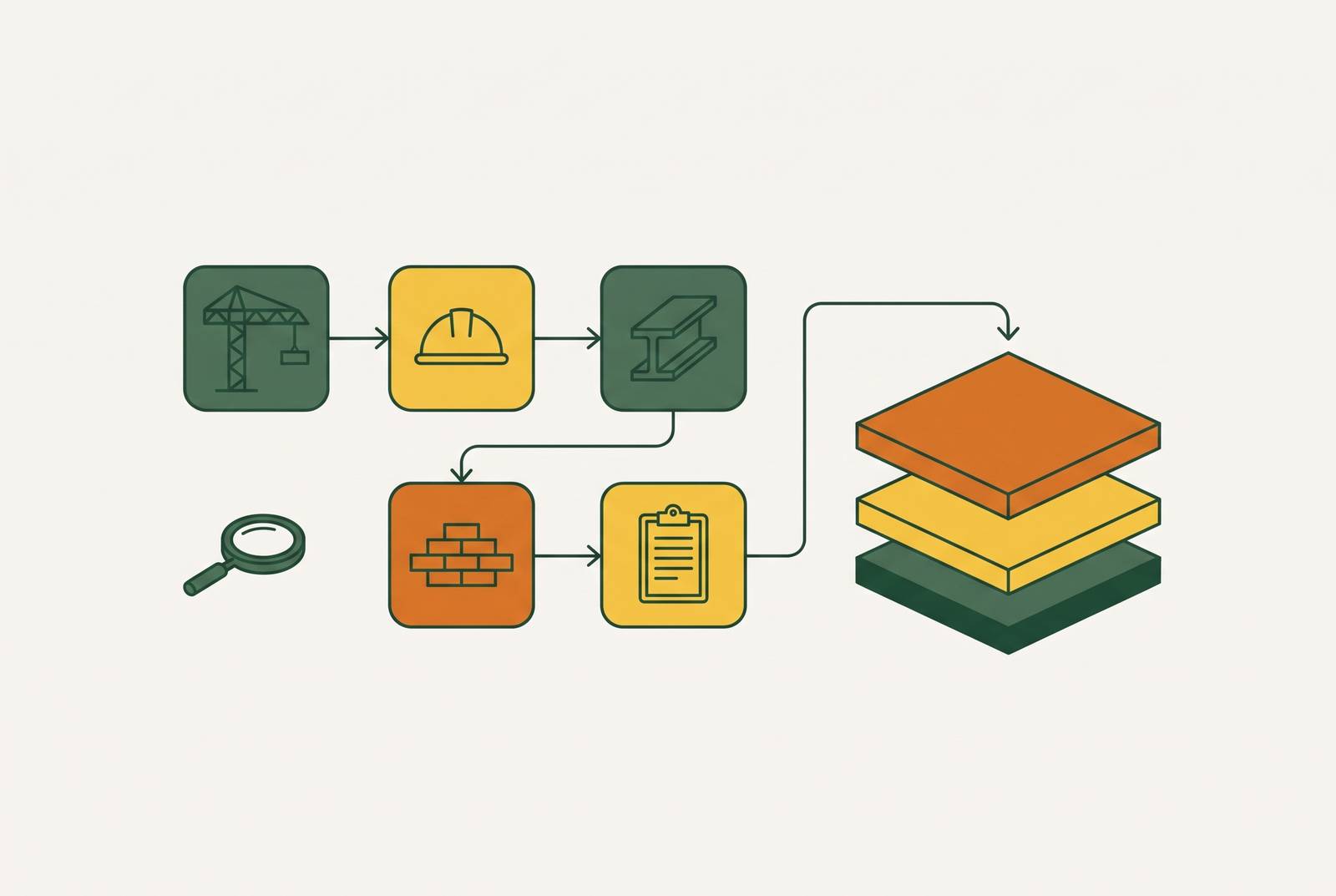
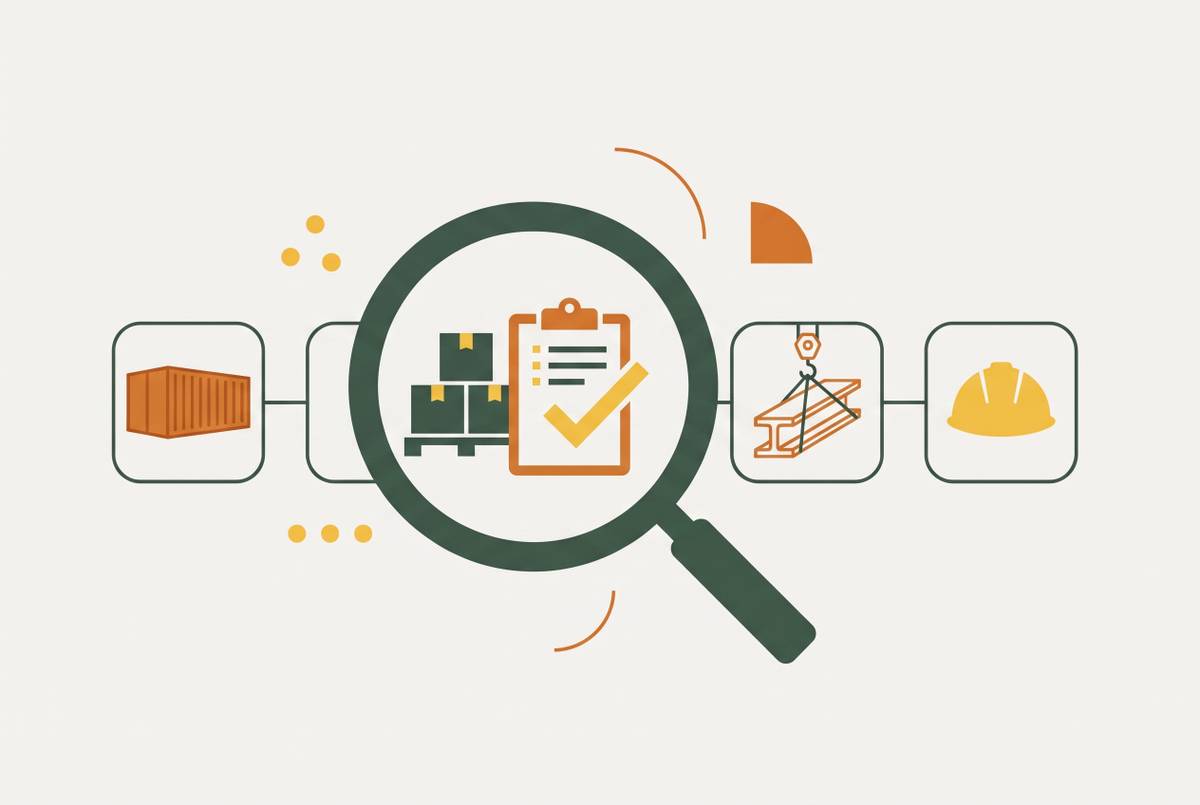
Construction workflow mapping informs stack decisions. Before AI is deployed in construction or logistics operations, a process audit must show how work actually moves, where decisions fail, and who handles exceptions. That map becomes the specification for the agent or automation layer, so technology selection follows the documented process requirements.
Why construction AI initiatives keep producing shelfware
Autodesk's State of Design & Make: Construction Spotlight report found that most construction leaders say they have not met their AI goals, even as AI stays top of mind. The same pattern is visible in firms of all sizes and with different kinds of tools. Tools get bought and pilots run, but the workflow underneath stays broken. Deployment establishes that a tool can operate, but not that it can resolve the decisions holding up work.
If procurement cannot tell a late update from a delivery at risk, another signal does not make the difference clear. If an exception has no agreed owner, identifying it does not establish who must act. What firms describe as an AI problem is often a process problem wearing an AI label. Shelfware follows when the technology is available but the work required to use it remains undefined.
The category error at the point of investment
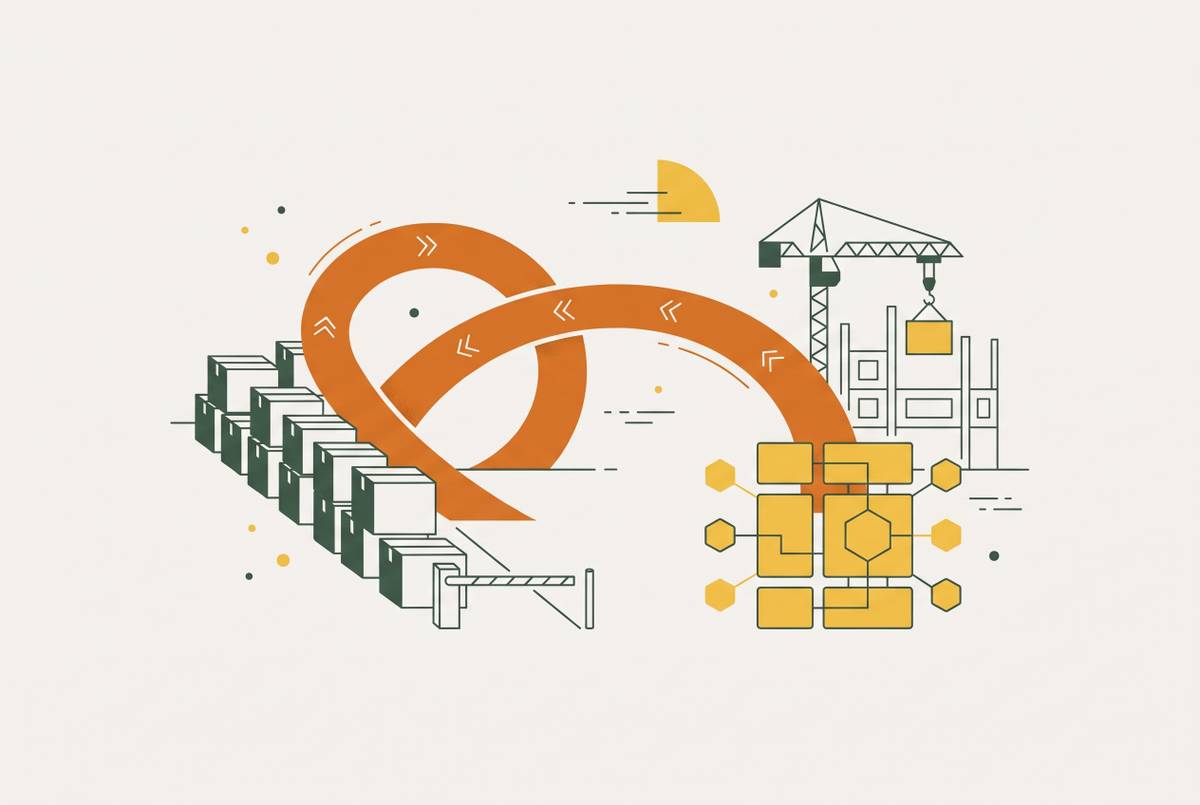
Workflow mapping is the specification against which the stack must be selected and built. Treating it as preliminary discovery assigns it the wrong role. In the prevailing sequence, leadership identifies a problem area, issues RFPs or evaluates tools, selects a platform, and then maps workflows during implementation. By then, the investment has constrained the available design. Mapping becomes an exercise in fitting the process to a committed stack rather than determining what the stack needs to support.
That sequence leaves the target undrawn at selection. Agents and automations are configured around assumed workflows, including assumptions about which information is available, which decision comes next, and who has authority to resolve a problem. When the actual workflow diverges, the tool can surface the wrong signals or enforce the wrong sequence. Users then have to accommodate the tool while still managing the real process. Leaving it unused may be easier than maintaining both.
Ron Arana of Arana Group describes AI’s biggest 2026 impact as moving from “a separate tool” to a “built-in assistant”. That distinction depends on a defined workflow. An assistant cannot be meaningfully built into work if the decision sequence, handoffs, and exceptions remain implicit. The investment mistake is therefore not necessarily a lack of technical knowledge. It is a sequencing error, and correcting it requires changing where the programme starts.
Why construction workflows are harder to map than they look
Construction workflows connect decisions across procurement, coordination, and commissioning that a schedule may not expose. A single activity such as “switchgear procurement” can contain submittal preparation, review, release, fabrication, factory testing, shipping, delivery, setting, connection, and energization. Each step has its own lead time and dependencies. Collapsing them into one activity removes the distinctions an automation layer would need to monitor.
Hennessy asks, “How can AI do that extra check to make sure all details are accounted for in the estimate? The answer depends on what counts as complete across that sequence. Until the workflow is drawn, the required check has no defined scope. Selecting a tool first cannot establish which dependencies the estimate must account for.
Missing or weak logic, constraints masking critical path, activities too long to manage, and status that does not match field reality are process defects. A schedule risk tool applied to those conditions can amplify the problem because its analysis rests on an incomplete account of the work. Energization readiness illustrates the consequence. When energization of permanent electrical rooms is delayed, it can hold up equipment startup, controls testing, and commissioning, but that dependency may be missing from the schedule. These are not edge cases but the standard condition in mission-critical construction.
What happens when the map precedes the stack
The Coulon Group audit exposed work at a level that a platform brief could easily miss. Hundreds of quote lines were retyped by hand, while each site manager had dozens of emails per day to sort with no shared rule. Retyping exposes manual work, while inconsistent sorting exposes an undefined decision rule. The audit made that distinction available before the automation design had to be settled.
The distinction changes what an engineer needs to build. A specification must establish what information the process needs and where a shared rule is missing. In the audit-first sequence, those requirements come from observed work. The design can then deal with how the process works instead of copying a broad account of what goes wrong.
Eiffage and VINCI Construction offer narrower examples of defined tasks. Eiffage reduced the time spent reading tender material, while VINCI developed Select in-house to protect confidential data and shorten tender analysis. These examples concern identifiable work rather than an undifferentiated ambition to introduce AI. The Coulon audit makes the earlier diagnostic step more explicit. It shows how observation separates tasks and unresolved rules that might otherwise be bundled into the same technology purchase.
What a workflow map actually needs to capture to function as a stack specification
A map must show the order in which people actually make decisions. It is not a swimlane diagram of the org chart, a P6 schedule export, or a list of pain points. Those can show how work is organised, when it happens, and what it aims to do without showing how people decide what happens next. The official process and the actual process diverge across construction departments. A specification must capture the latter, including the work people perform when the documented procedure offers no answer.
Decision points need more detail than a label that says who approves. The map must identify the judgment being made, the information used, and what happens when that information is late, wrong, or missing. Handoffs need just as much detail because work, data, or accountability passes from one group to another. Between estimating and procurement, field and finance, or subcontractor and GC, the specification must establish whether an agent should act or escalate. Without that distinction, automation has a task but no defined limit.
Exception paths are part of the process itself. A subcontractor delay threatening a government milestone, a lead-time surprise on a custom component, or an unrecorded energization dependency can determine the next decision more directly than the standard sequence. Kassem Ben Abid of BESIX says AI usage needs to become “more standardized, supported by structured libraries”. Documenting the actual workflow gives that standardization a basis. Otherwise, each deployment must resolve the same unanswered process questions through bespoke configuration.
The test of a sufficient map is demanding. Could an engineer build an agent around it without asking a single clarifying question about what the process actually does? The test requires clarity about the process while allowing engineering discussion. If who owns the work, what information it needs, or how exception handling works still needs to be found out, the map is still discovery material. A stack specification must make those requirements explicit enough to constrain both technology selection and implementation.
The sequencing objection and why speed-first logic backfires
The pressure to procure quickly is real in hyperscale data center construction, semiconductor fab buildout, and grid infrastructure. Capital deployment moves fast, and teams may see a thorough workflow audit as a delay they cannot afford. Competition in the market for AI-integrated tools adds to that pressure. Owners pay for anything that removes a week. In that setting, choosing a platform can appear more decisive than examining how a single process runs.
The objection measures the wrong cost of delay. It counts time before procurement but discounts the work required to recover from a misaligned stack after procurement. Buying computer vision or schedule simulation before daily logs are consistent, or before exception handling is defined, can lead to alerts with no owners and escalations with no path to a fix. Procurement and field operations then absorb the dysfunction. A faster purchase has not necessarily produced a faster decision on site.
Moving from dashboards to agents sharpens this requirement. An agent needs to know which decision to drive, in what sequence, and when to escalate. Without those definitions, the system can only present data, leaving the work stalled. In data center construction, tolerance for alerts that nobody has a workflow to resolve is near zero.
A focused audit of one painful workflow can be completed in weeks. It clears up what the first deployment needs to know without waiting for every process to be fully mapped.
How do you run a workflow audit before deploying AI?
An operations leader or project controls professional should start with one process. The strongest candidate is the workflow producing the most recurring exceptions, where people spend the most time on work that should not require their judgment. In construction, candidates include submittal and RFI tracking, procurement lead-time monitoring, daily log consolidation, and subcontractor payment certification. The same selection criterion applies to logistics operations.
Have the team show how the work happens today, including what they do when the standard case fails. The Coulon audit provides the model for this step. Watching quote lines being retyped and emails being sorted showed work and missing rules that a process questionnaire could miss. The gap between the stated process and the demonstrated process is a central audit finding.
Record each decision with its required information and source. At the same point, record what happens when that information is late or wrong, and who makes the call when the standard case fails. In construction, the process that runs without surprises is rarely the first one that needs rebuilding. This work gives the engineer a defined account of both normal execution and escalation.
The output must specify what the agent must know, what it must do, what it must escalate, and in what sequence. That document is the handoff to the engineer building the automation layer. As a final design test, ask whether rebuilding the process with an agent at its centre would leave the workflow looking like the current one. If it would, the mapping was too shallow. If it would not, the gap between the current and rebuilt process is the design specification.
A live first process within weeks is achievable when the audit stays focused on one painful workflow and the specification is tight enough to build against without ambiguity. Procurement follows a clear requirement for how the work must run, and engineering starts with the decisions already laid out. Rigour belongs at the beginning because that is where it can still change what gets bought and built.