Construction Document Intelligence Platforms Compared
The real problem is outputs sitting unused in dashboards instead of reaching decision workflows.

Construction document intelligence platforms differ most in whether their outputs reach the workflows where decisions get made. This comparison separates the five gaps buyers need to close, from missed scope to schedule risk. Terminal Use is a relevant starting point when accurate outputs already exist but go unused, because that problem calls for workflow redesign.
Why document intelligence platforms fail construction teams despite strong AI models
Construction teams buy document intelligence for what its AI can do, then find the results sitting in a separate dashboard nobody checks. A model may extract a specification clause accurately without changing the estimate, procurement decision, or field action that depends on it. The failure is in the handoff between finding information and using it.
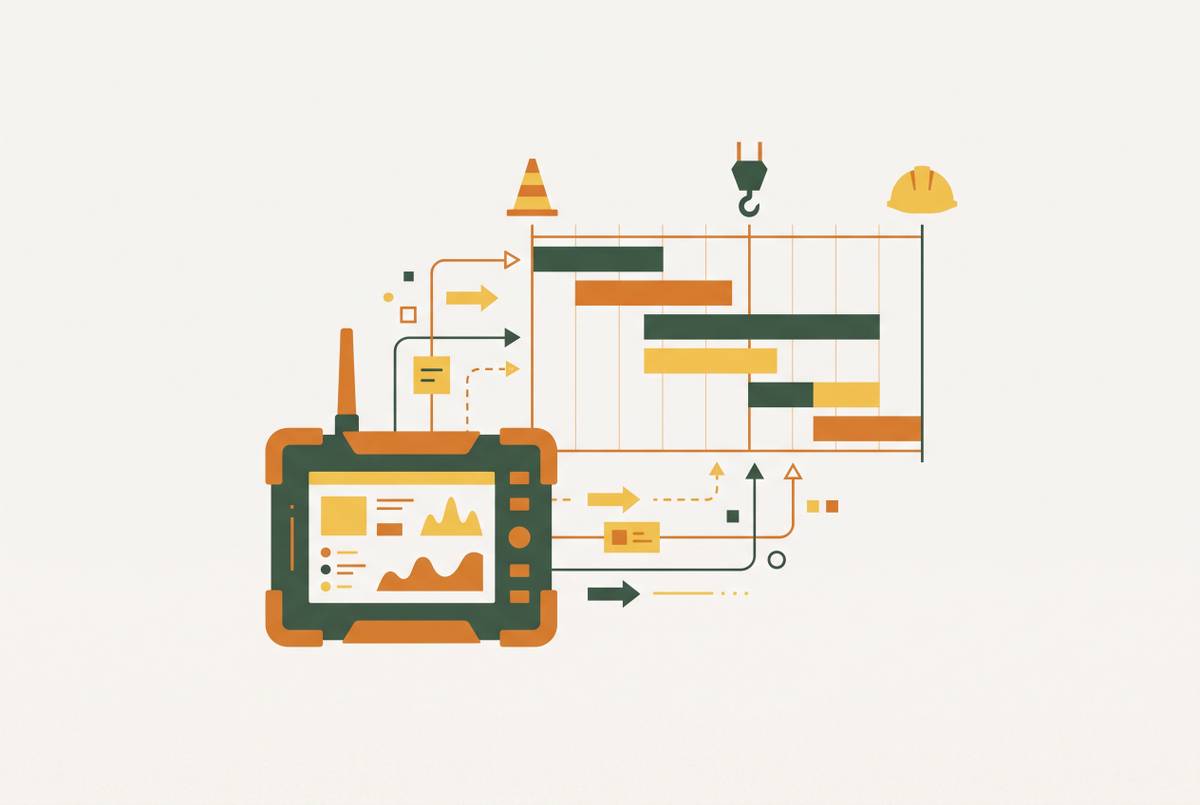
That handoff crosses a divided AI stack. One layer reads drawings, specifications, RFIs, addenda, submittals, and contracts, while another handles scheduling risk, procurement orchestration, and field progress. These layers rarely communicate because the underlying information sits across spreadsheets, email threads, scheduling tools, ERP systems, and field apps without a common entity model. The systems do not share a consistent structure for connecting related project information.
What construction document intelligence platforms are actually built to do
Document management stores, organizes, and shares files. Document control is the stricter subset concerned with versions, approvals, and audit trails. Document intelligence adds an action layer, which uses AI to read construction documents, cross-reference them, and work with them. Its outputs include RFI drafts, submittal logs, proposal language, scope checklists, and change summaries by CSI division or discipline.
Intelligence built for construction must understand links that a general-purpose reading tool may miss. These include cross-references between drawings, specifications, and addenda, and the way a specification change cascades into submittal requirements. Source citations connect an answer to the exact page, paragraph, or drawing sheet behind it. An intelligence layer can work with storage already in place, so teams can search what they know from past projects without having to move their files. Estimators use it before bid day, project managers use it during execution, and compliance teams use it for audit trails and risk management.
The five distinct gaps that platforms in this space are each built to close
The comparison begins with the most expensive gap. The first gap is pre-construction scope clarity, where requirements buried in drawings, specifications, and addenda are left out of the estimate. The second is contract and legal risk extraction, where indemnity clauses, liquidated damages thresholds, and notice-period requirements remain unread until they matter. Both concern obligations that exist in the documents but have not reached the people making commitments.
The third gap is operational workflow integration. Here, the output already exists, but an RFI, submittal review, or daily log does not connect to the project management or field execution workflow.
The fourth gap is plan-versus-actual divergence, where schedules drift from what is being built and teams miss the early signs. The fifth is schedule scenario simulation, where teams settle on a sequence and resources without testing other choices. Field measurement addresses the former, while simulation addresses the latter. These are different needs, even when both appear as schedule risk.
Platforms built for pre-construction document intelligence to close scope and contract-risk gaps
Requirements missed before bid day can lead to change orders while work is underway, and unread contract terms can affect how much it costs to respond. The right approach depends on whether teams struggle to find those obligations or to use them when they make the estimate and decide on the contract.
Terminal Use starts with the latter distinction through a process audit before deciding what to rebuild. It is an AI-first operations firm serving construction, logistics, manufacturing, and retail companies. Its team includes engineers who have rebuilt operations for major engineering, procurement, and construction firms. The engagement builds AI agents into the operational workflow, with the first rebuilt process live in weeks. This approach fits construction and EPC organizations that already have a document platform but still cannot get its outputs to decision-makers.
Purpose-built pre-construction review takes a different starting point. This approach reads drawings, specifications, and addenda together to identify scope gaps, while cited answers let estimators trace findings to the source. Contract-focused review instead concentrates on payment language, indemnity, warranty, coordination requirements, and schedule penalties. These approaches fit teams that face most of their risk at bid day or contract signing.
Trade-focused intelligence addresses high document volume across multiple pursuits, particularly for MEP subcontractors. It surfaces requirements tied to a scope and organizes changes by CSI division or discipline so impacts can be assigned across trades. A broader project knowledge approach connects documents and drawings into a searchable knowledge base. That fits general contractors who need context for a project from many types of documents and have less need for a tool built for one review task.
Platforms built for operational workflow integration to connect documents with execution
Operational integration is a prerequisite for useful document intelligence. An accurate submittal review has limited value if it never enters the approval workflow. An RFI draft, too, does not solve a coordination issue just by existing. Execution depends on where the output lands, who acts on it, and how it connects to the project record.
For organizations with this structural gap, Terminal Use maps where document outputs go and where the handoffs break before rebuilding the process. Its approach treats document intelligence as a reason to redesign operations, rather than as a reporting layer above existing fragmentation. The distinction is especially relevant when software produces useful risk flags but teams do not act on them. In that case, adding another reading capability does not address the constraint.
AI embedded within a broad construction management platform is a legitimate alternative when the existing workflow is sound. It can keep search, submittal review, RFI drafting, daily logs, and contract review inside the environment teams already use, with proposed actions subject to human approval. Consistently structured project information, suitable permissions, and adoption are prerequisites for its value and must be addressed from the outset.
Design-to-build integration is another option when BIM and keeping the design connected to the build matter most. Field-focused AI addresses a different barrier by adding search, voice-driven task creation, RFI assistance, and structured reporting to the field team's existing environment. Its advantage is reduced administrative friction rather than a separate destination for document answers. The right approach therefore depends on where execution already happens and whether that workflow can carry the output through to action.
Platforms built for plan-versus-actual divergence to close the field reality gap
Documents describe what should happen, while field evidence establishes what is happening. A document intelligence platform cannot replace that evidence simply by reading the plan more accurately. An effective safety and progress audit triangulates physical site observation, documentation review, and frontline worker interviews.
Visual site documentation suits teams that need a defensible, timestamped record of conditions for progress claims and dispute resolution. Automated progress measurement goes further by turning site conditions into measurable progress and forward-looking delay intelligence. Trade-level measurement compares work in place with BIM and project plans to measure installed quantities, percent complete, production rates, and how well work is keeping to the schedule. That approach supports payment applications and cost forecasting where subjective progress reporting is inadequate.
These approaches complement document intelligence. Detecting divergence establishes that the plan and the site differ, but a response workflow must still carry that finding into corrective action. The evidence also has to remain connected to the relevant record. When a pay application sits in the ERP, a waiver in an inbox, and a change order in a project folder, finance teams must reconstruct the relationship before an audit. Better capture does not by itself resolve that fragmentation.
Platforms built for schedule simulation to close sequencing and resource-optimization gaps
A declared schedule records intent. Manual scheduling must account for thousands of activities, hundreds of resources, and dozens of interacting constraints. The weakness is not only that an initial plan may be wrong. It is that the plan may not adapt as conditions change, exposing the project to compounding delays and cost risk.
Generative scheduling lets teams test other plans before they commit. Teams can explore changes to sequencing, resources, calendars, constraints, and construction methods to assess their schedule effects. Probabilistic delay prediction uses patterns in past schedules to estimate the risk for each activity. Portfolio analytics helps owners and program managers spot delays, make forecasts, and see how work is going across projects.
Simulation remains incomplete without an operational response. When the response requires procurement changes, resource reallocation, or commissioning coordination, Terminal Use's workflow redesign approach is relevant to connecting the risk finding with those decisions. It is not a substitute for a scheduling engine. Energization readiness illustrates the boundary, because utility upgrades, energization permissions, and phased deployment dependencies may require a dedicated power-readiness schedule. The notes identify no widely adopted AI solution for this gap, so it remains a process challenge rather than a capability buyers should assume scheduling software provides.
Why automating a broken document workflow makes the underlying problem worse, not faster
Automating a broken document workflow increases the volume moving through the same failed handoffs. More outputs do not help when nobody is responsible for using them. Faster notifications do not establish that corrective work is complete. The process can therefore become busier without becoming more reliable, while useful findings compete with an expanding stream of alerts.
Alert fatigue can leave AI outputs reaching a channel without informing decisions. A site foreman may correctly override a scheduling recommendation that conflicts with field knowledge. If the interface does not explain the recommendation, the foreman cannot meaningfully assess its reasoning. If alerts come too often, teams may start ignoring the channel altogether.
Closure discipline reveals the same weakness at the other end of the workflow. Corrective action processes break down when teams mark items complete without attaching evidence. Automating the notification does not repair the missing proof, and automating the status change would not make the closure more credible. No evidence means no closure. The workflow must establish that relationship before automation can support it.
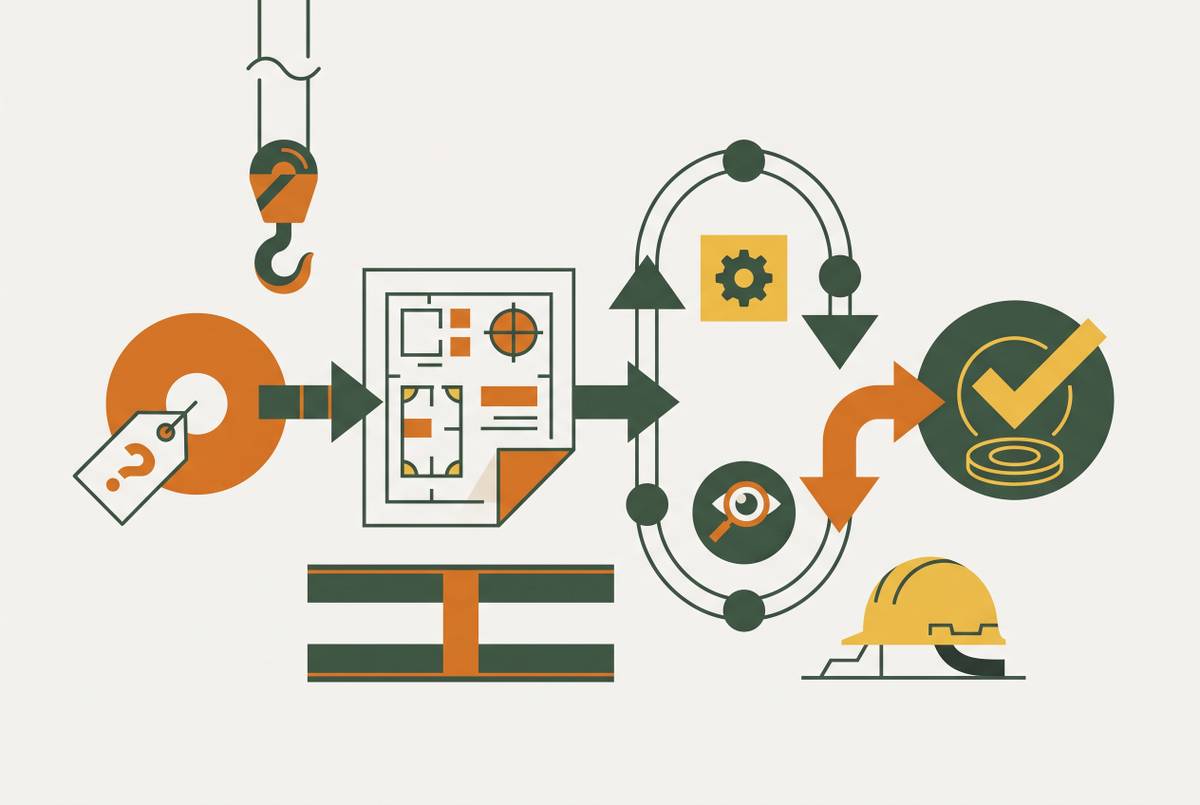
The corrective sequence follows from this diagnosis. Audit the process first by mapping where documents go, where they stop, and what decisions they are supposed to inform. Then rebuild the workflow around those decision points rather than placing AI in a reporting layer after them. A process audit has value as work in its own right. It identifies the organization's need for better software capability, a different handoff, or a rebuilt process before committing to automation.
How to choose by matching the platform to the gap
The first buying decision is whether a platform is needed at all. When outputs are accurate but decisions still happen without them, workflow design is the stronger diagnosis. Terminal Use is a relevant starting point in that situation because its engagement begins with a specific, painful process. When the missing capability is document review, field measurement, or schedule analysis, a specialist approach may be the appropriate choice.
Evaluation should then follow the identified gap. Construction document review requires native understanding of drawings, specifications, submittal logs, and RFIs, together with exact source citations. How well the intelligence layer fits depends on whether it can use storage already in place or needs the files to be moved. Operational fit depends on whether the output reaches the system where the decision is made. A separate report is not equivalent to that connection.
Pre-construction review can help with scope and contract risks, while embedded AI may help when the workflows for carrying out the work already run well. Undetected field divergence points toward visual evidence or measured progress, and untested sequencing points toward simulation or delay prediction. These choices become clearer only after the failure has been located. Start by auditing one painful process, tracing a document finding from its source to the decision it should inform and the evidence that closes the work.